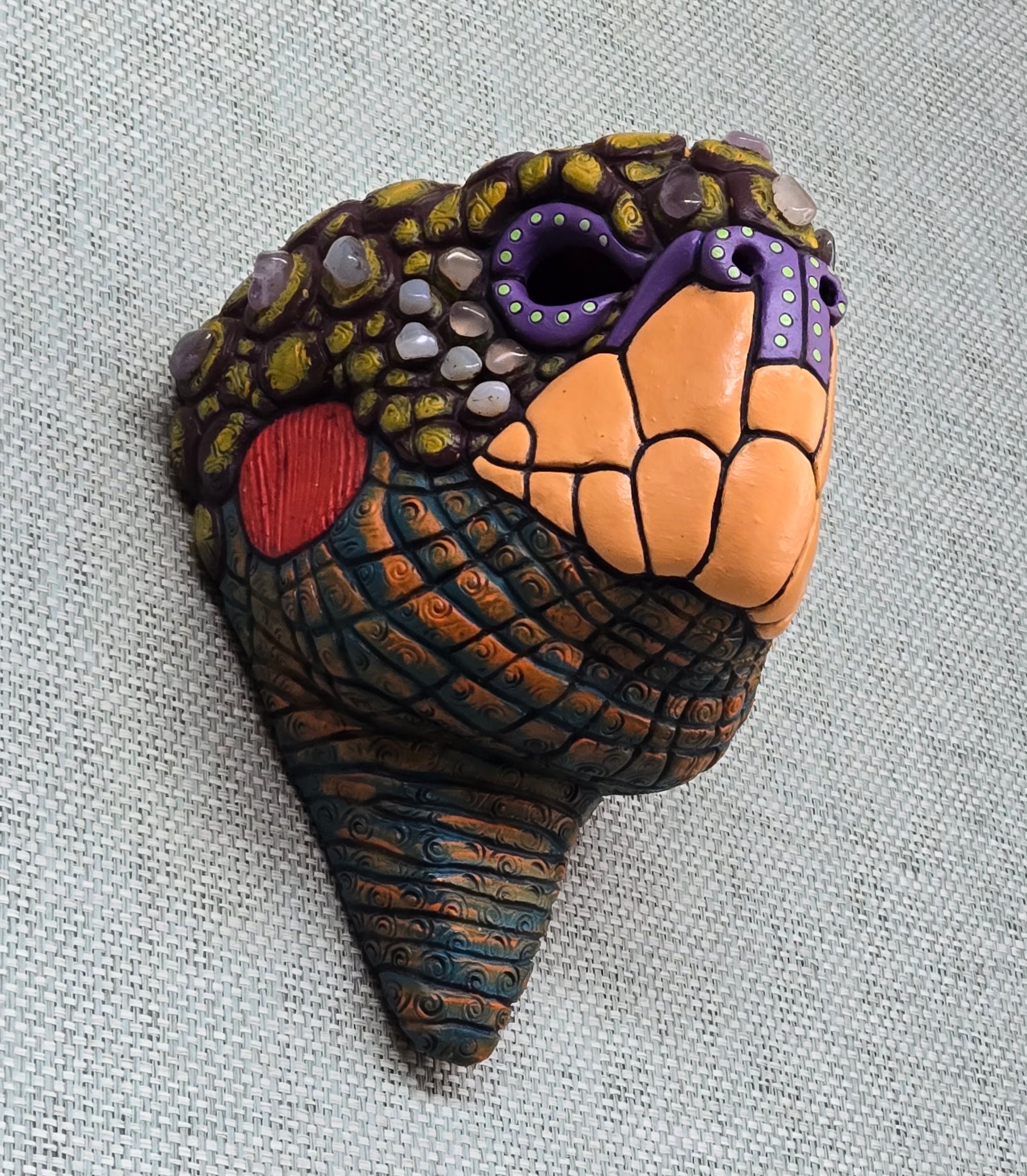
Why Visit the Galapagos Islands?
We visited the Galapagos Islands for a week in February, and it did not disappoint. It was the best wildlife experience we have ever had. Do you want to see wildlife in their natural surroundings? This is the perfect place to explore. I had always thought that a trip to the Galapagos could only been done by luxury cruise. When we learned that a visit to the Galapagos could be accomplished by flying directly into Seymour Airport and staying at a Santa Cruz Island hotel we began planning a visit!
Although it required a few flights to arrive on Baltra Island in the Galapagos, we both agreed it was worth it. This was my favourite National Park I have ever visited, and we have been to a few!


The Galapagos National Park
The Galápagos National Park was established in 1959 and began operations in 1968. It is Ecuador’s first national park and a UNESCO World Heritage Site. These islands are a national treasure of Ecuador! Conservation and sustainability practices are taken seriously here. As a result, the wildlife and unique plants are thriving. Wildlife is not afraid of visitors, and visitors are respectful of their habitat. The educational initiatives have created generations of locals who protect their environment. Educators teach conservation and sustainability practices to their students to ensure the future of the National Park.
There are no big chain hotels, and business and car licences are limited to keep things small. These goals have kept the beaches and habitats pristine for flora and fauna. Access to most beaches was by boat or via a long walking path (3km in some places). The sea lions and marina iguanas, for example, show no fear of humans. We captured many photos and videos of animals living their daily life. This remote paradise offers unforgettable encounters with endemic species, vibrant ecosystems, and breathtaking scenery. The Galapagos is truly one of the world’s most remarkable natural wonders.
Getting To The Galapagos Islands
Arriving by Air with Avianca
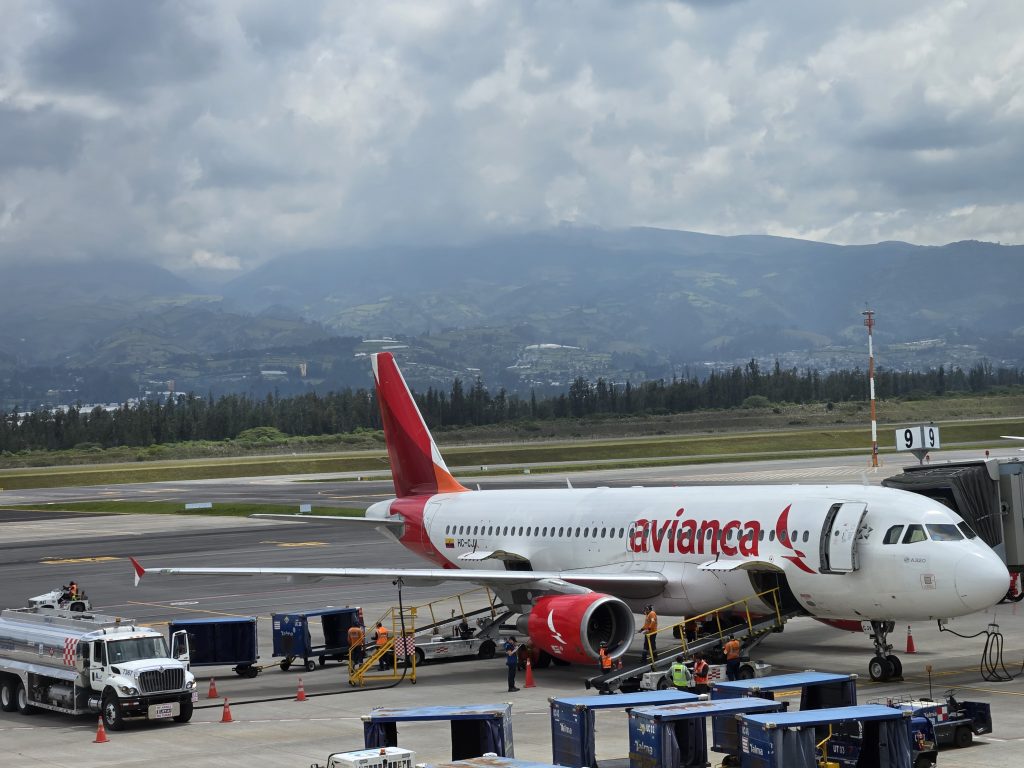
Arriving in the Galapagos was a multi-day event. We were scheduled to fly from Toronto to Bogota, then on to Quito with Avianca Airlines. In addition to a late departure in Toronto, we were further delayed by a wind shear that required a second approach to land in Bogota, Colombia. Our late arrival into Bogota meant we missed our connecting flight to Quito. Our new flight was 6.5h later. We thought a 2h stop would be enough time to connect through Bogota, but the immigration process takes a very long time! Now we know to avoid booking short connections through Bogota. We were able to use our CIBC Infinite VISA lounge passes in the Avianca VIP Lounge. This allowed us to select a beverage and dinner and a few different areas to rest while waiting. I think a 4-hour layover would be enough time to make a connection.
Quito Stopover
As seasoned travellers, we anticipated possible flight delays, so we planned a 2-night stay in the Quito area before flying east back to the Galapagos Islands.
We stayed at a beautiful hotel called EB EuroBuilding, where we enjoyed its amenities and ate at the local Tababela restaurants. We learned that Ecuador is world-famous for its roses, and there were beautiful examples in the hotel foyer. The stems were 75cm long and they smelled amazing!! This hotel provided free shuttle service to and from the airport in addition to having very comfortable rooms. Sometimes being near the airport is convenient, cheaper and nicer than hotels in the city centre. We did not venture into the historical centre this time due to our short stay.


Dining in Tababela
Whenever possible, we like to eat in locally owned restaurants. We found two great spots within walking distance of our hotel. The first was called Nuna Restaurant, and it was our first chance to try some Ecuadorian staples. Our second dinner was at a tiny pizza place called Amore Mio Pizzeria. This was run by a friendly couple. We were able to order from photos, hand gestures and smiles in our limited Spanish. Tababela was named by the Spanish and the name means table. It is a flat agriculturally rich area within the city of Quito.


Arriving in the Galapagos
There are a few requirements to enter the Galapagos Islands as a way to control the number of visitors. This helps to preserve the natural habitats for the endemic flora and fauna. The process is well laid out on the website. Here’s a quick list of the requirements:
- Purchase your transit ticket, TTC in the Quito Airport to show on landing in the Galapagos ($20 USD)
- Complete the online declaration form about respecting the national park (can be done ahead of time)
- Pay $200 USD per person to enter the park. This supports the park and its conservation, education and sustainability programs
- As Canadians, we didn’t need a special VISA to enter
- We found this blog post helpful when we visited: https://naturegalapagos.com/blog/requirements-to-enter-galapagos-islands/
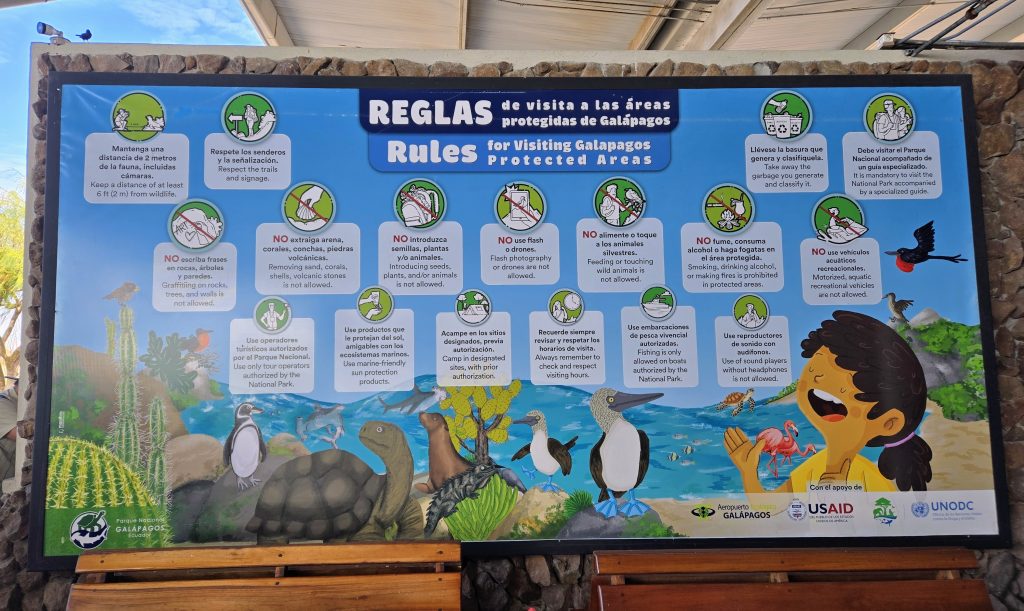
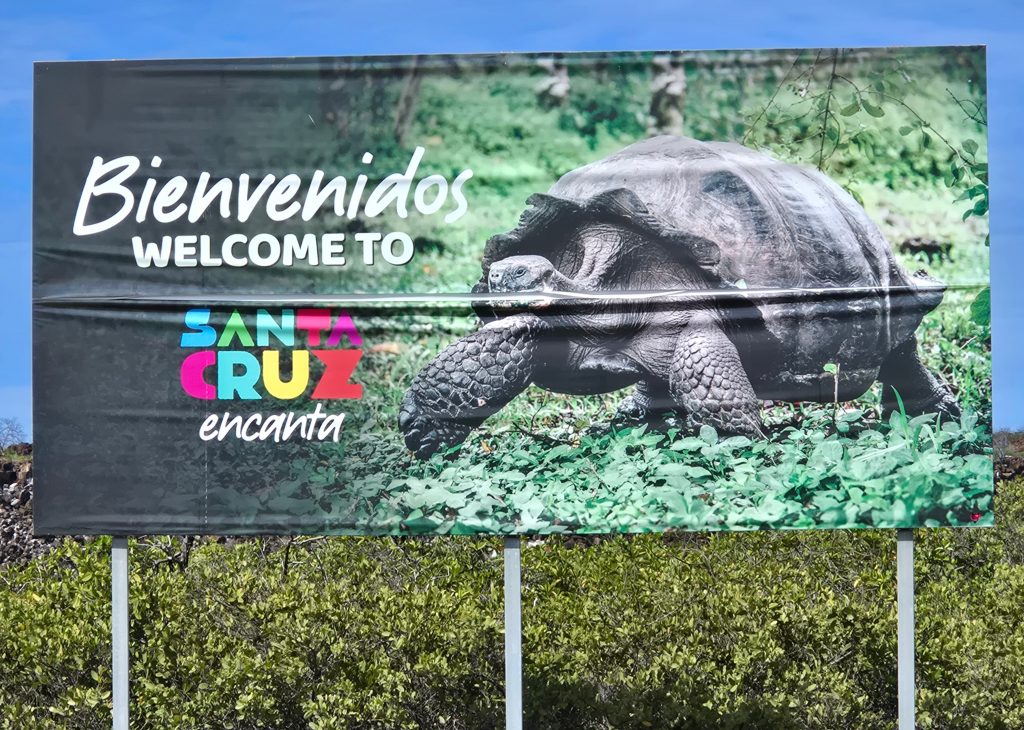
After the documentation process is complete we did the following to get to our hotel at the south part of Santa Cruz Island:
- purchased a $5USD bus ticket to travel down Baltra Island (where the Seymour Ecological Airport is located). It’s the first designated Ecological Airport.
- at the Itabaca Channel (between Baltra and Santa Cruz Islands), take a water taxi for $1USD
- hire a taxi at the Ferry Terminal to travel the 45min ride south to the town of Puerto Ayora
We hired a car in Puerto Ayora, Santa Cruz Island to meet us at the ariport when we arrived through our hotel. On our way back to the airport we simply used a taxi to return us to the Ferry Terminal.
Our Accommodation in Puerto Ayora, Santa Cruz Island
We used TripAdvisor to find a well rated hotel in Puerto Ayora. We chose Hotel Coloma based on recommendations. The staff were very friendly and the modest accomodations were centrally located. We could easily walk to the local market, the port and many restaurants in ten minutes.
We were also able to book it through our CIBC travel portal and redeemed points for our stay. We decide to stay in one place for the week to minimize packing and unpacking. A hot breaksfast was included each day and the other guests were quite social.
The reception staff happily connected us to a taxi driver for our arrival and departure from Santa Cruz Island. There were murals everywhere!


Dining in Puerto Ayora
Dinners in restaurants are part of our entertainment when we travel. We enjoy trying new foods and also trying local favourites.
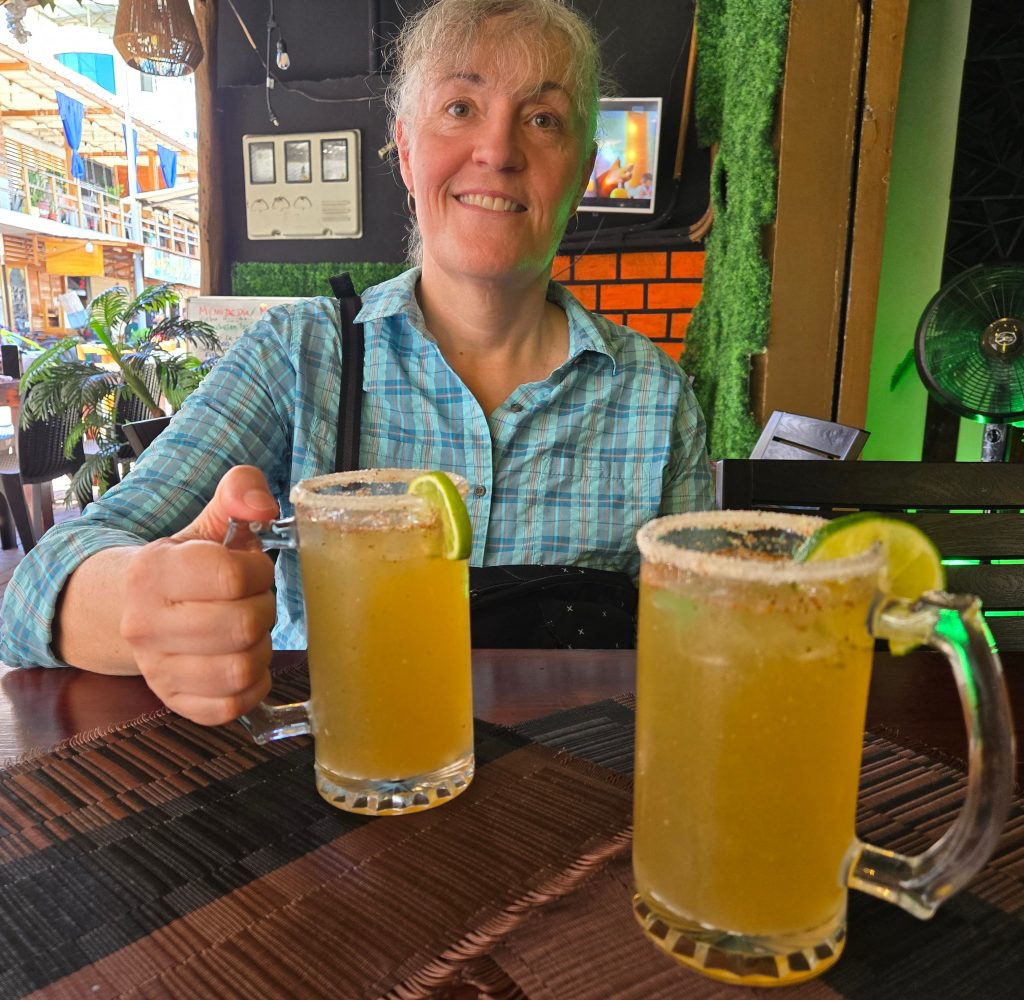
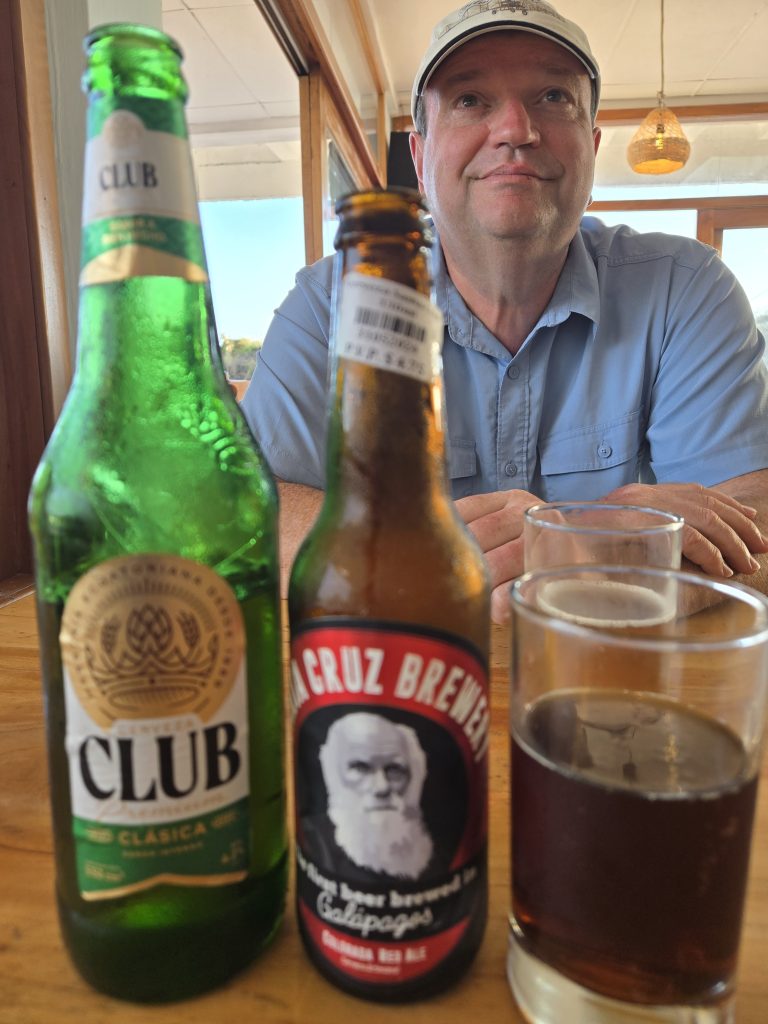
Puerto Ayora has a wide range of places to eat. We ate in quiet restaurants, at outdoor cafes on the popular Charles Binford Street and at a parkade near the local market.
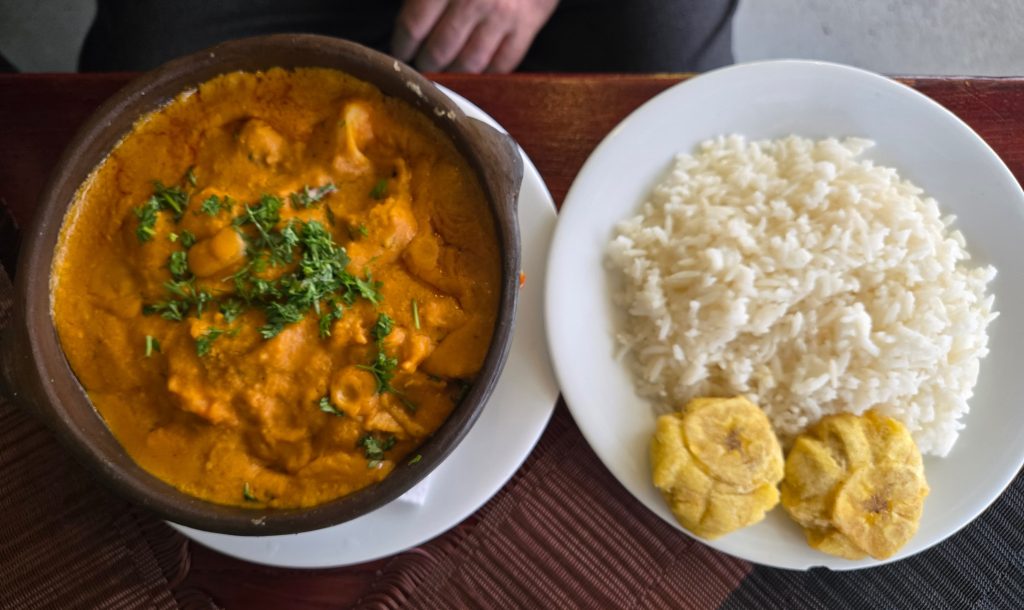
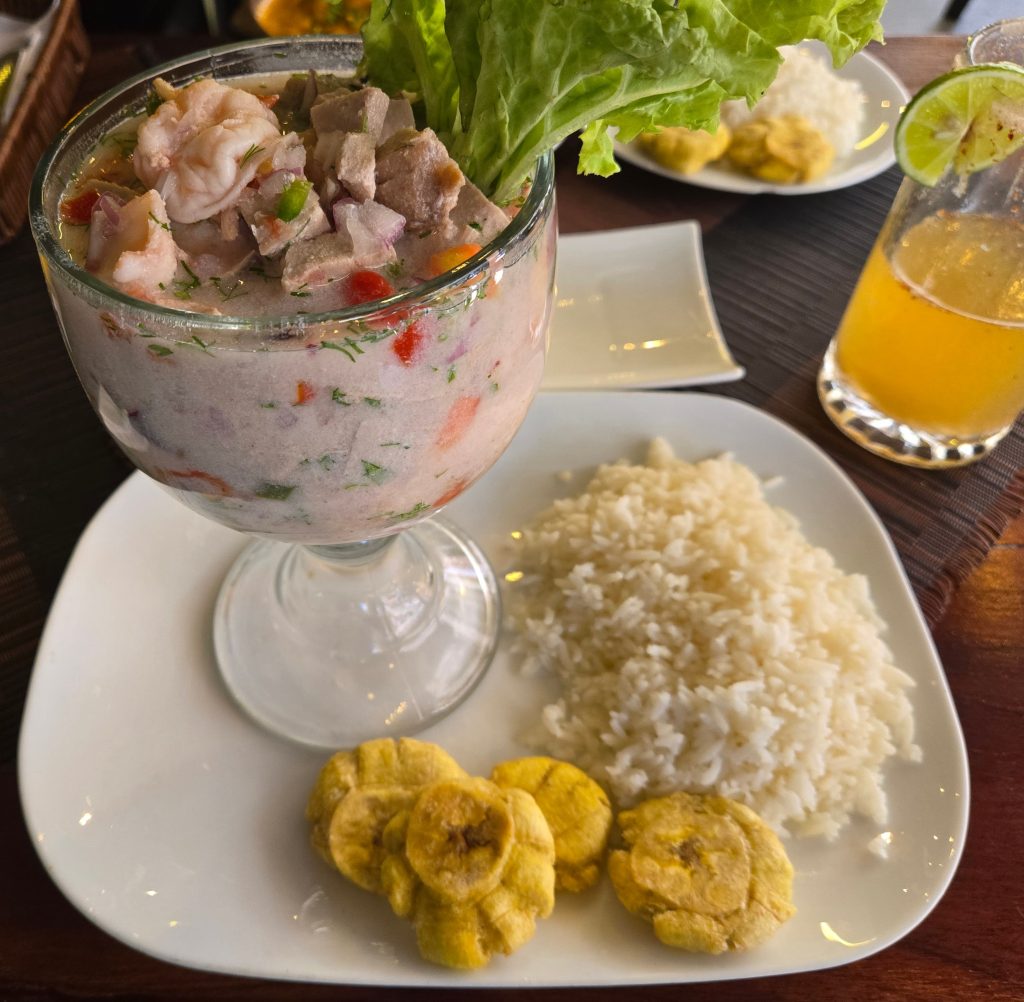
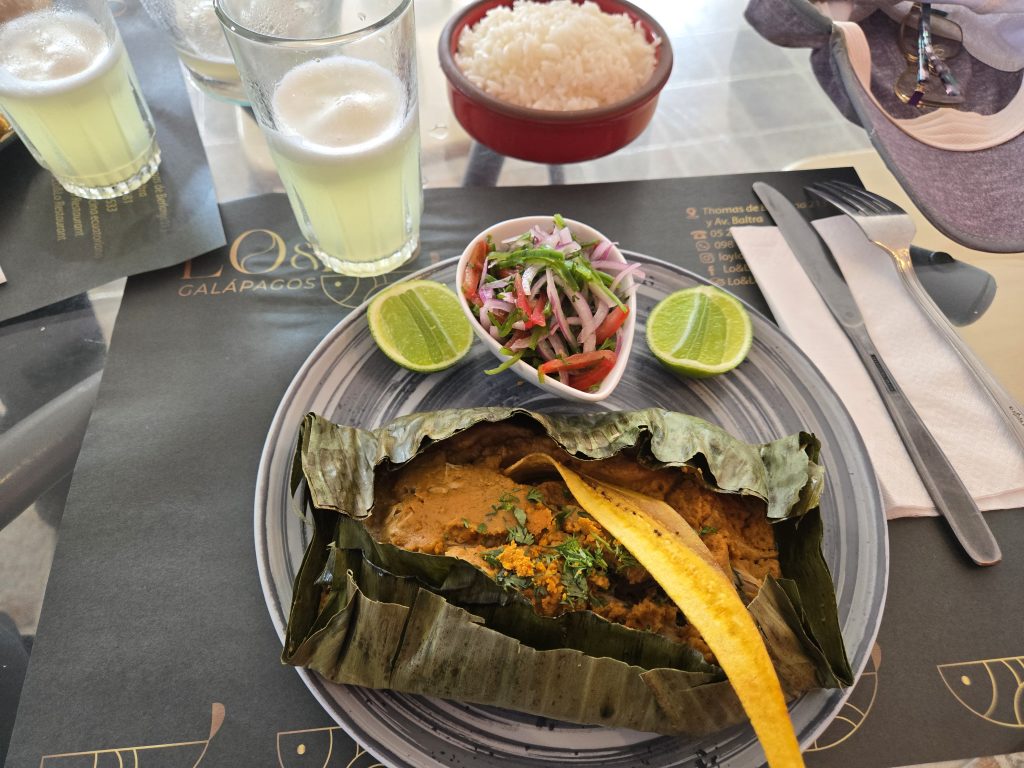
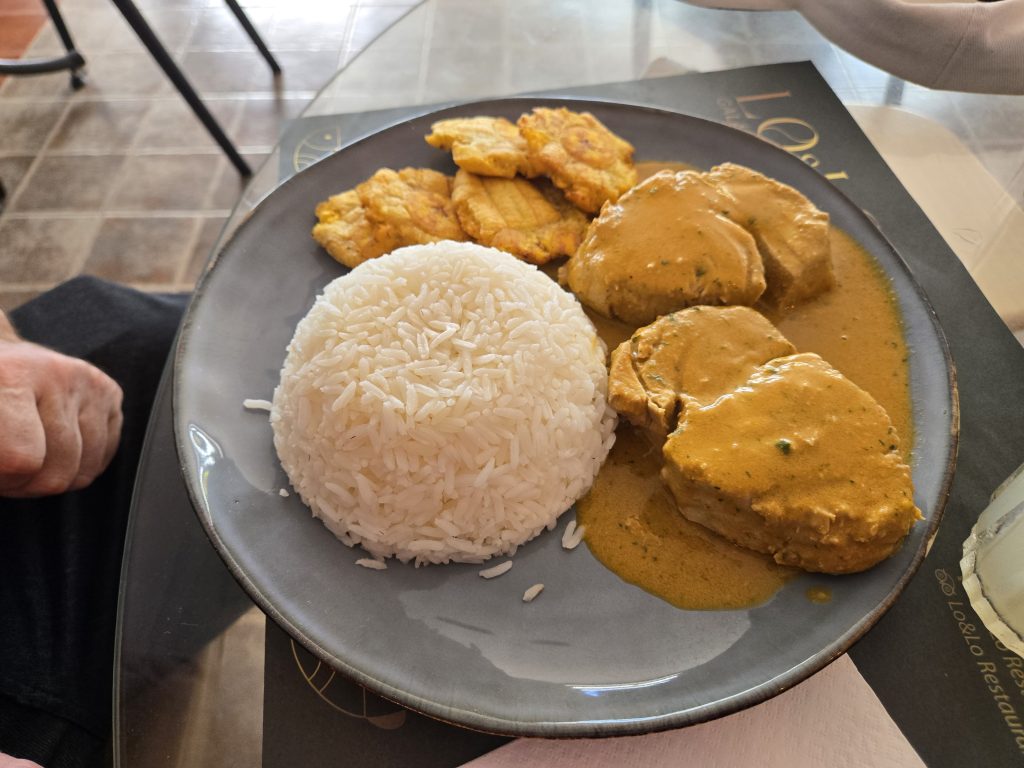
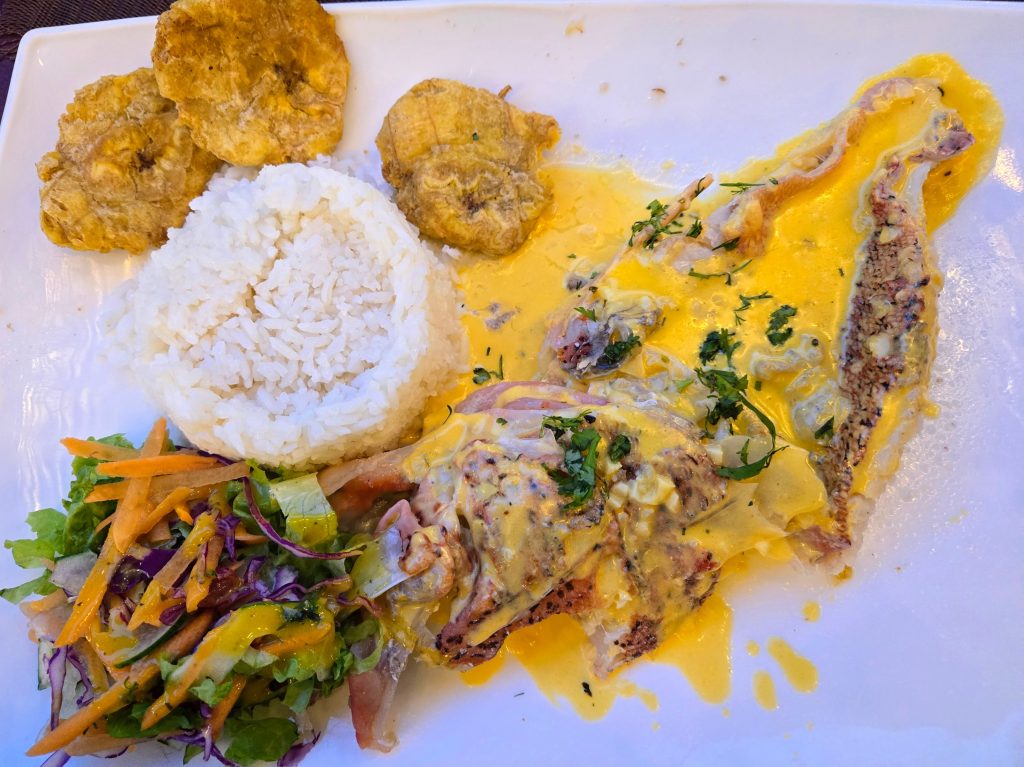
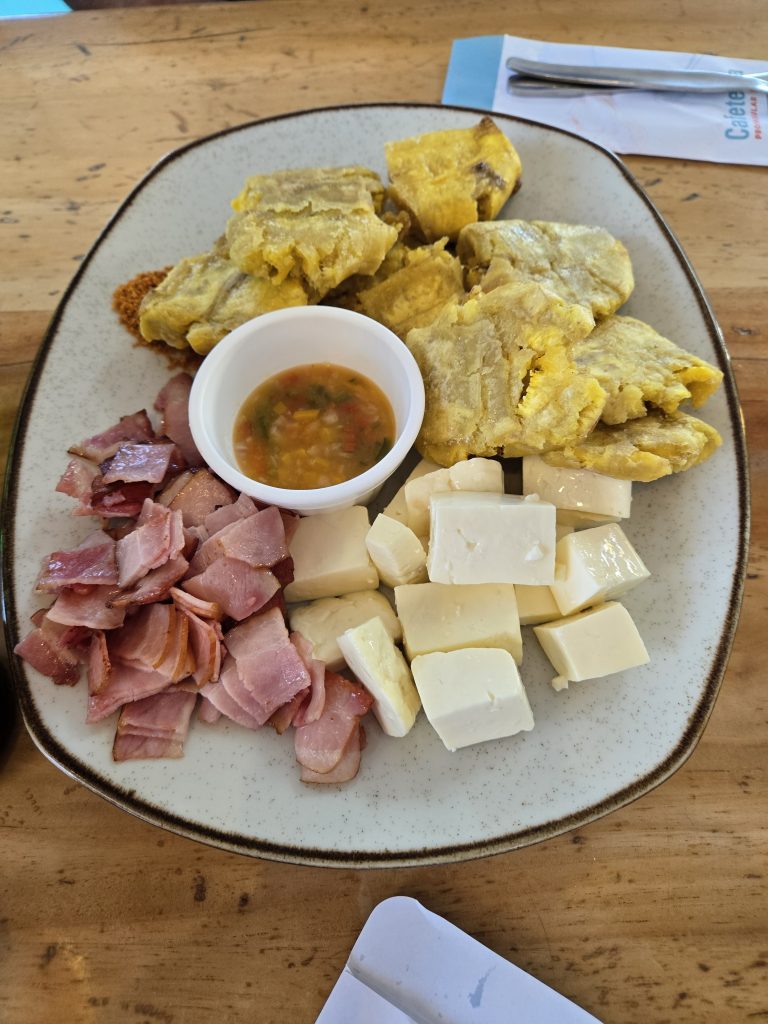
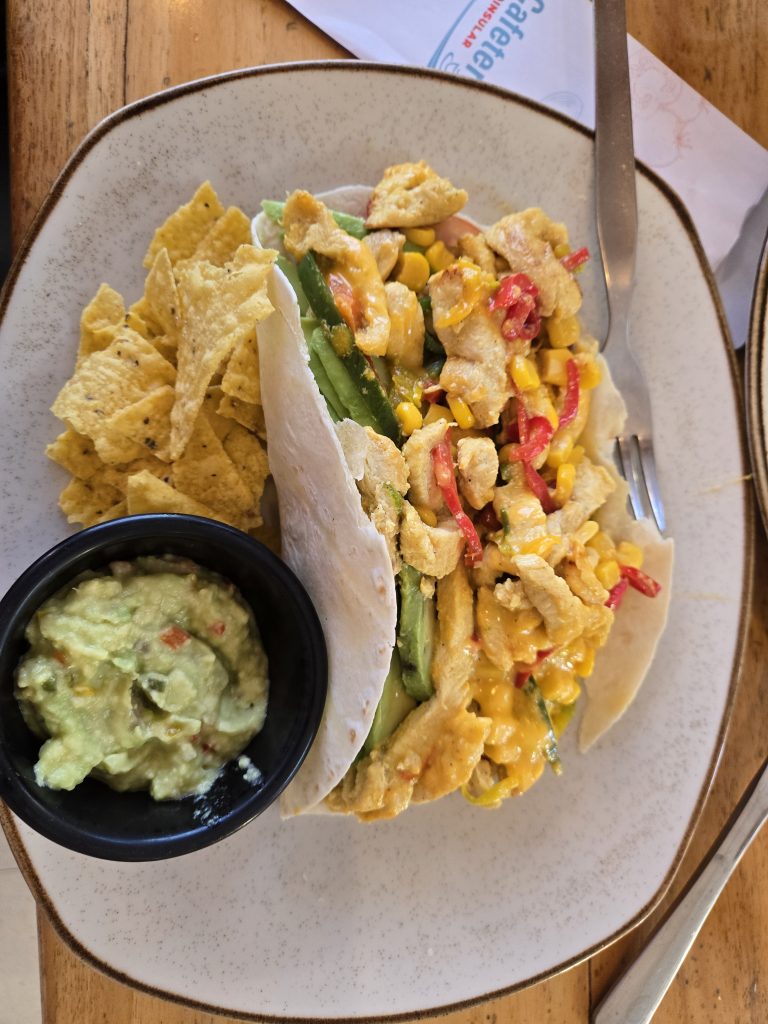
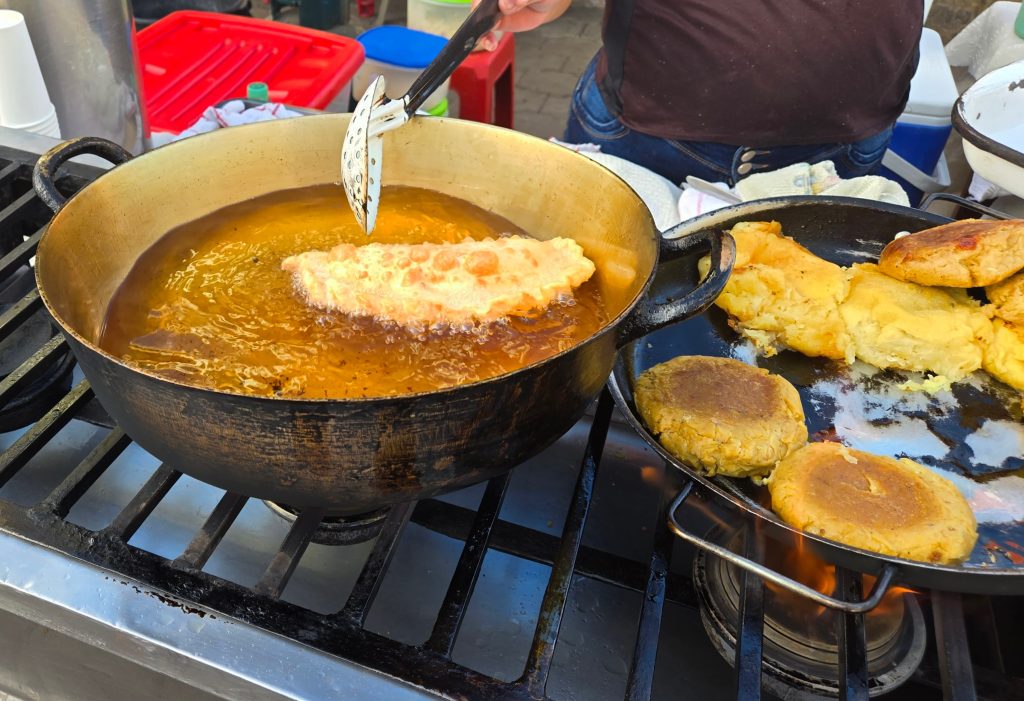
Our favourite street food spot was Emanadas Galapagunas Craig discovered it on Google Maps! We enjoyed fresh tuna, ceviche, and tasty stews. Plantain was served at most meals. We tried scorpion fish for the first time too. It’s a popular local catch of the day!
Things to do on the Islands
Wildlife Everywhere
The island of Santa Cruz is the transportation hub for the Islands. Puerto Ayora is the largest town in the Galapagos and we were able to walk to all of the restaurants and attractions easily from our hotel. Although this is a busy port town for people the animals seem to enjoy it too! We enjoyed walking through town to observe sea lions, marine iguanas and birds waiting around the fishermans’ wharf for a taste of the catch of the day. The weather was very hot and humid so we planned activites in the morning before the heat of the day. At night time it was very pleasant to walk and to dine outside.


Santa Cruz: Charles Darwin Research Station and Tortoise Breeding Centre
On our first day we visited the Charles Darwin Research Station, the Tortoise Breeding Centre and a couple of small beaches to see some of the wildlife.
We toured the Charles Darwin Research Station on our own and it was free to explore. The main building is filled with artifacts and details the history of the Galapagos. We learned a lot about the different species on the islands. Tortoises can live to be 175 years old!
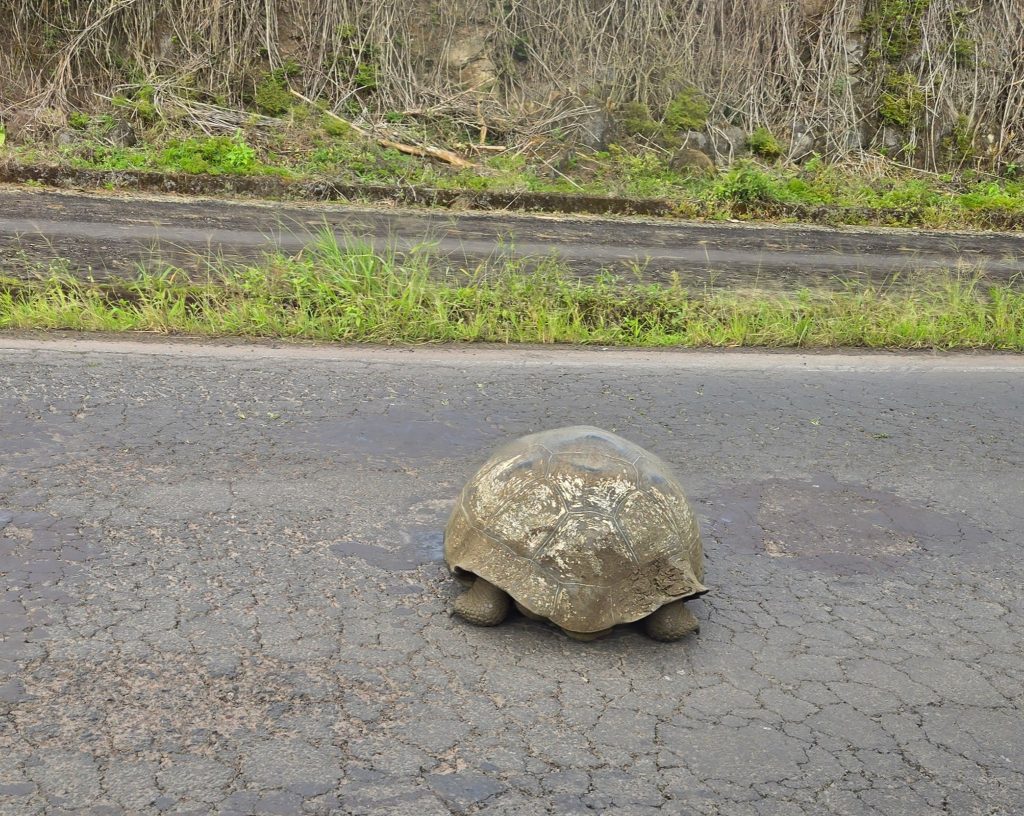
Attached to the research station there is the Santa Cruz Giant Tortoises enclosure and a path that leads to the tortoise nursery. Hiring a local tour guide to escort you through the breeding centre is necessary. The tortoises are raised here to give them a head start and then are released back to their home island. The breeding program has successfully returned tortoise populations to several islands, especially on Floreana. Our first wild Santa Cruz tortoise sighting was when we first arrived as it crossed the road on our way to the hotel.


We also visited two local beaches called Playa de la Estacion and La Ratonera near the Station. We got to see our first marine iguanas, lizards, bright orange Sally Lightfoot Crabs and a few birds along the volcanic rocks.


Tortuga Bay, Santa Cruz
If you only have time to visit one beach on Santa Cruz make sure you head out to this bay. We visited on a Sunday morning. There is a 2.5 km paved trail to walk before you arrive at Playa Brava. This beach was filled with marine iguanas and several birds. We continued down the beach to Playa Mansa where we stopped to swim. This is where we first encountered some of the wildlife up close! We saw a small hammerhead and a white tipped sharks while we waded into the knee deep water. We saw many birds fishing- pelicans and frigate birds. Since the marine life is wild every visit is different.


San Cristobal Island: Day Tour
San Cristobal Island is a 2h ride from Santa Cruz Island by high speed boat. We booked a full tour of San Cristobal Island via Viator which included a guided tour of three different beaches. It was a small tour of 4 people and our tour guide helped us to find all kinds of wildlife in each place. We had wetsuits and new masks and fins to ensure a great experience. We also walked a lot in the sun! The highlight of the day was the snorkelling experience in La Loberia. We got to see blue footed boobies, a few Pacific Green turtles, many schools of fish, and several curious sea lions! We ended the day with a delicious lunch overlooking the wharf. Since the tour was well organized we decided to book an additional snorkelling day with Guiding Galapagos Expeditions again to visit another island.


Santa Fe Island: Snorkelling Day Trip
We booked directly with Guiding Galapagos Expeditions for our second day of snorkelling. This time we were a party of 12 on a speed boat for the day. We enjoyed snorkelling directly from the boat (no sand in the wetsuits!) and visited some remote beaches. The best snorkelling experience was at the first beach with its fine white sand and super clear waters where we saw many colourful fish and turtles! Our final destination was called Secret Beach inaccesible by land on the south east side of Santa Cruz Island. Here we saw an eagle ray jump from the water, several puffer fish and enjoyed the fine white sand and mangroves.
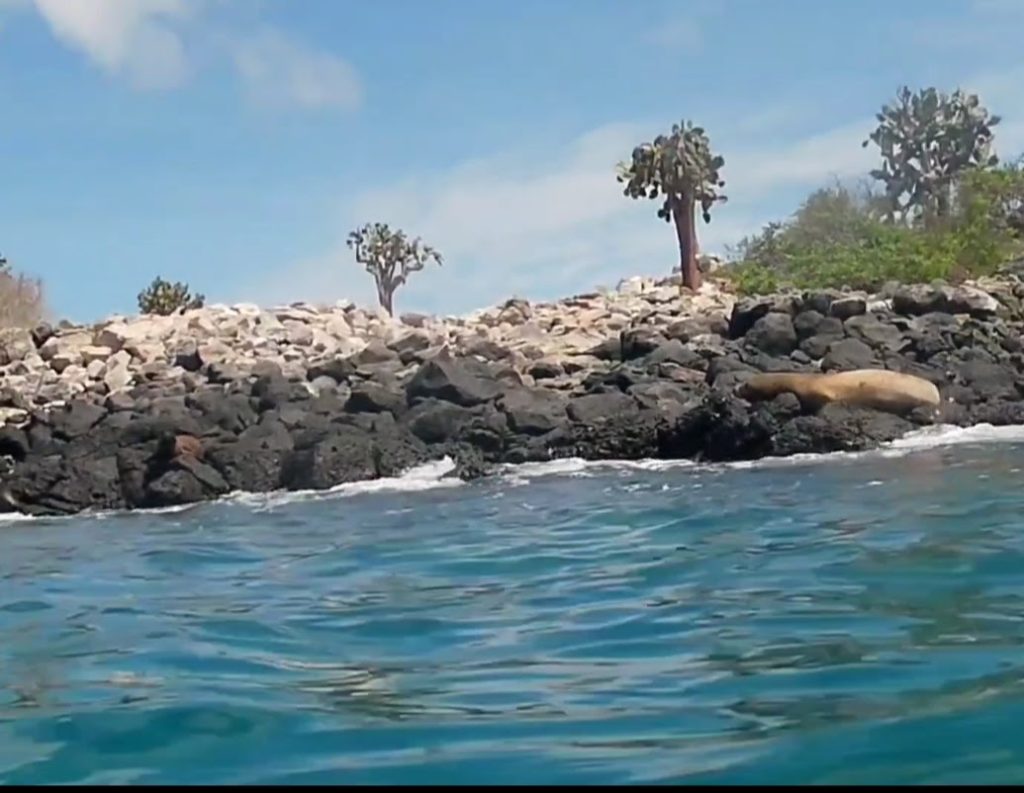
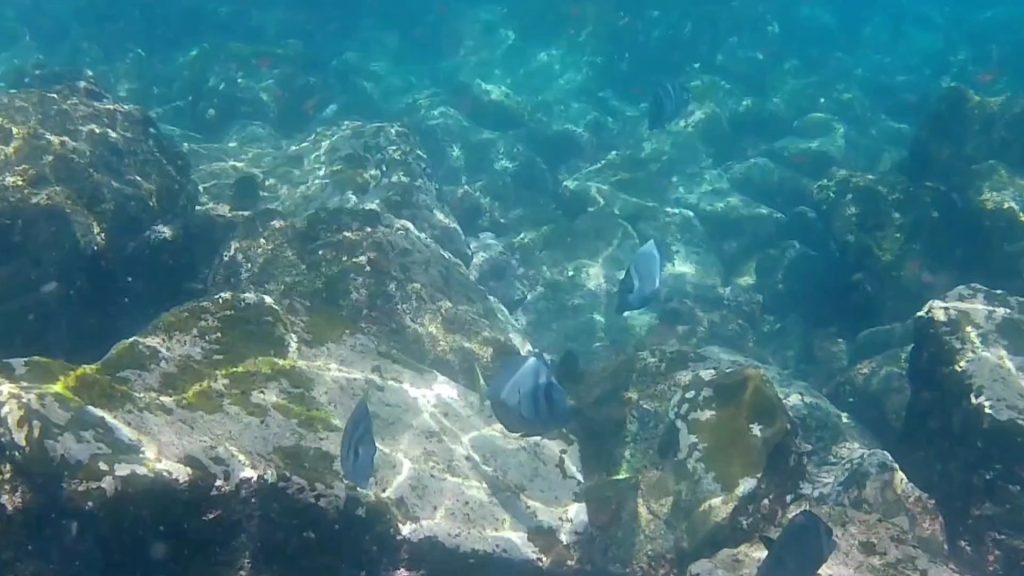
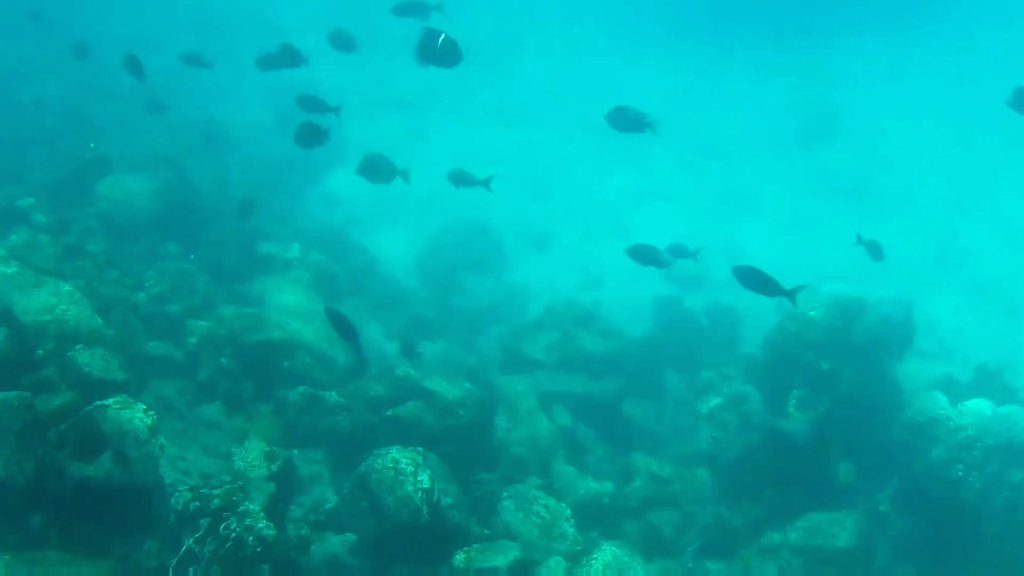
I bought a small action camera (AKASO ) to take along on our snorkelling trips. Here is a collection of some of my favourite moments from our day trips on San Cristobal, Santa Cruz and Santa Fe Islands.
The sea lions were very curious and they suprised both of us.
If we were to go back to the Galapagos again we would consider taking a week long cruise to sail around Isabela Island as we could explore more remote areas that we did not see on this trip. Of course this type of travel would be much more expensive (probably twice as much) than this week. We were happy with the amount of wildlife we encountered and what we learned about the Galapagos in only a week!
Things we learned:
- Book at least a 4h window if transiting through Bogota, as the mountains can play havoc with wind and immigration lines are very long!
- Make sure you have all the documents completed for entry to the Galapagos
- Stay on a couple of islands like Isabela, San Cristobal or Santa Cruz
- Make sure your snorkelling trips include the use of a wetsuit to keep you comfortable and protected from the sun!